

How To Rename User Folder Name In Windows 10
During the Windows installation process, many users do not think virtually how important it is to choose the right username. It is the name you will see when you log in to the operating system and one of the root words on the way to any installed program. The name of the user's folder depends on the name of the account. In this commodity, nosotros will await into how you can rename a user binder in Windows 10.

Content:
- Method 1: Creating a new account with the required name and changing its type
- Method 2: Renaming the user data folder in Windows x Home Edition
- Method iii: Renaming the user data folder in Windows 10 Pro and Enterprise
- What to practice if, during the data binder renaming, or moving your data into new user data folder important data was lost?
Oft, when installing Windows, the user is assigned a common name – like "User" or any other. Afterwards all, the system may not have been installed by you. Merely in the process of apply, a standard or whatsoever different username may annoy or dislike the user. Uncomplicated renaming a user folder on C:\Users volition non pb to anything. It doesn't work similar that. Nevertheless, there are too no functions in the system to change the name of the user folder. So what to do in this situation?
Method 1: Creating a new account with the required name and changing its type
When using an utterly new account, the deleting of which will not entail whatsoever negative consequences, one of the options for solving the task will be to create a new user profile with the necessary proper name and access level. Subsequently logging into a new business relationship, you can get rid of the old one by simply deleting it.
Important: After performing this operation, all content in the user's folder volition exist deleted.
To start with, you need to create a new account with the desired username. To do this, yous should:
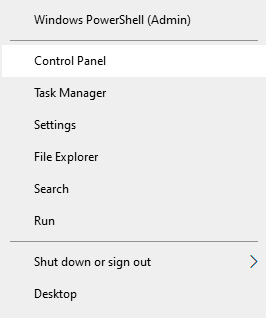
Footstep i: Right-click on "Start" push and select "Control Panel"
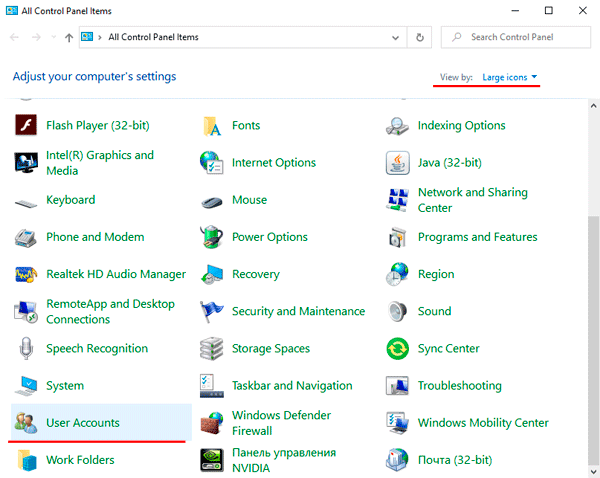
Step 2: While in the Control Panel, cull the "Large Icons" brandish mode and select "User Accounts"
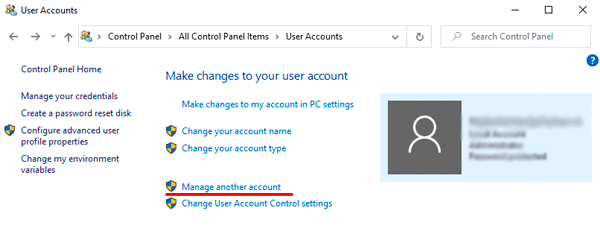
Pace 3: In the window that appears, click on "Manage another account"
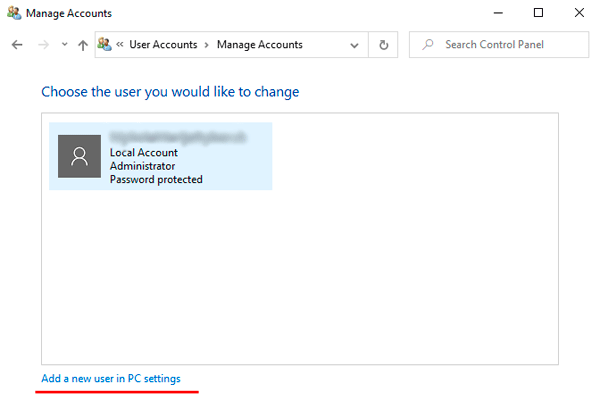
Stride four: To add a new user click on the link "Add a new user in PC settings"
Pace 5: The arrangement volition movement us to the "Family unit & other users" tab in the settings. Click on the button "Add someone else to tis PC"
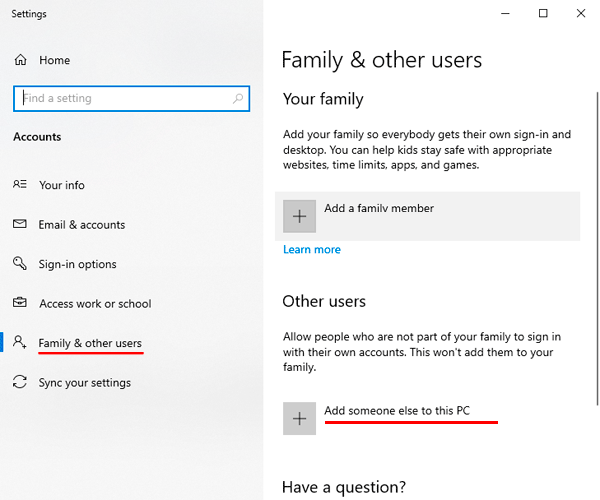
Step six: In the window that appears, click on "I don't accept this person'due south sign-in information"
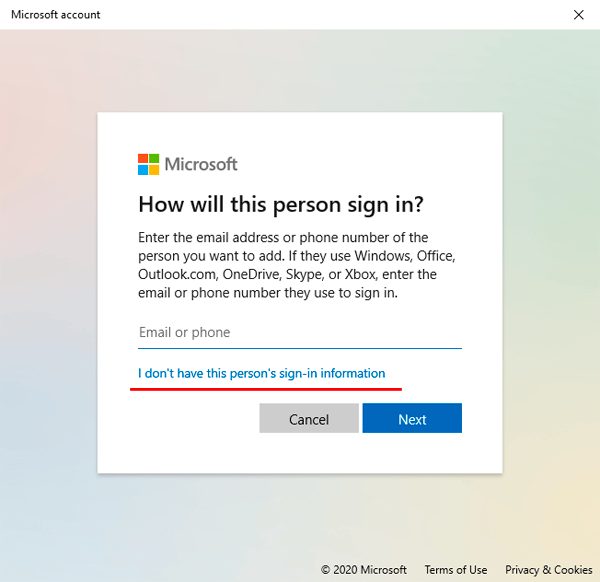
Step 7: So click on "Add together a user without a Microsoft account"
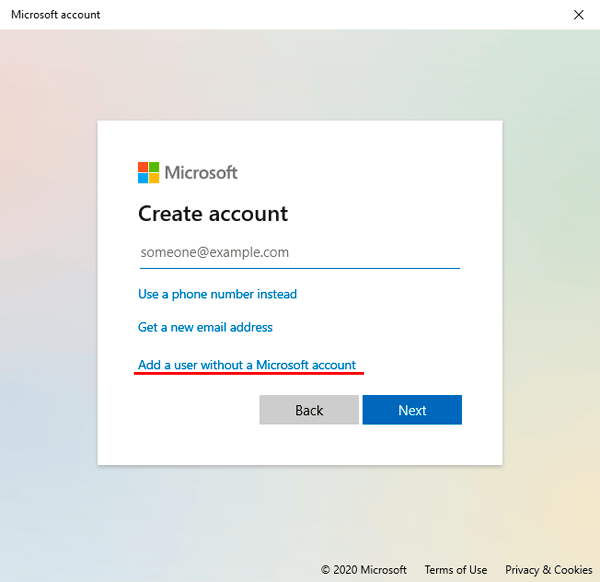
Step eight: Fill in all the necessary fields, and and so confirm the action by clicking "Adjacent"
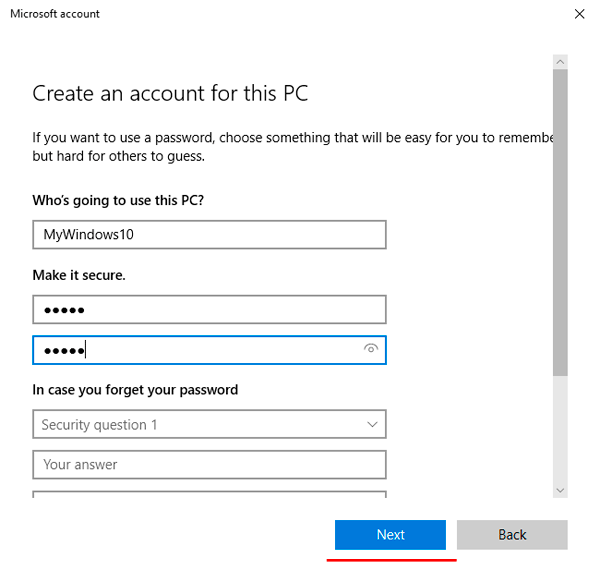
Pace nine: After a new account is created, select a new profile and click on "Change account type"
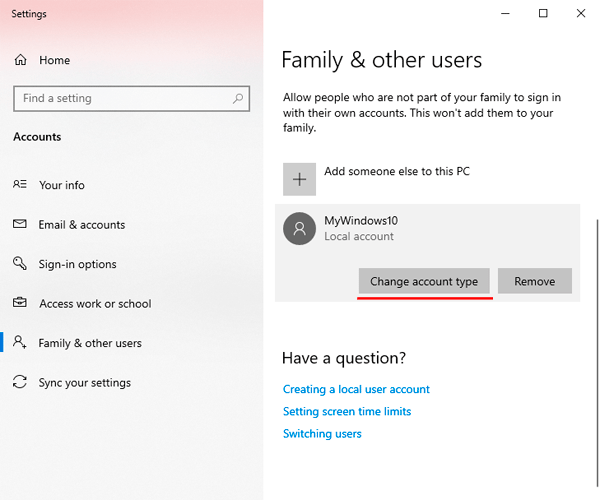
Step 10: Choose "Administrator" from the suggested types and confirm the action by clicking "OK"
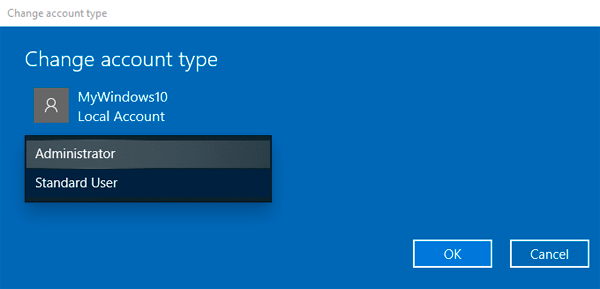
Later on completing the steps above, y'all must login to the new profile. To get rid of an already unneeded account, go to the accounts in settings and delete information technology
Notation: This method is the simplest 1, but equally a rule, it is used very rarely.
Method two: Renaming the user data binder in Windows 10 Home Edition
This method is suitable merely for Windows 10 Domicile users. Also, after the procedure, some programs will need to be re-configured because they will non be able to find some configuration files due to changes in the file structure.
To start with, nosotros need to activate the Ambassador account. To do this, nosotros need to:
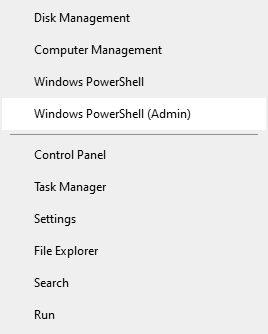
Step 1: Right-click on the «Start» button and select «Windows PowerShell (Admin)»
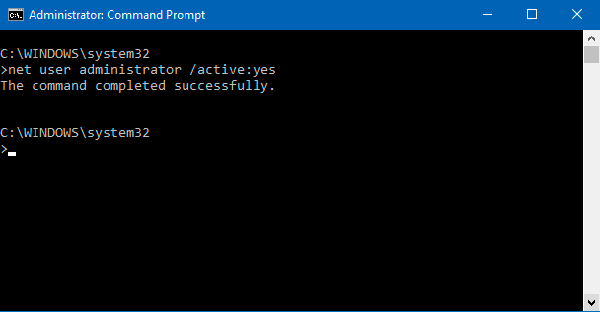
tep 2: Type the «internet user Adminisrtator /agile:yes» control and press «Enter»
Now, yous need to sign out of the electric current account and sign in to the account we just activated. To do this, press "Start", and then select "Ability" and click "Sign Out"
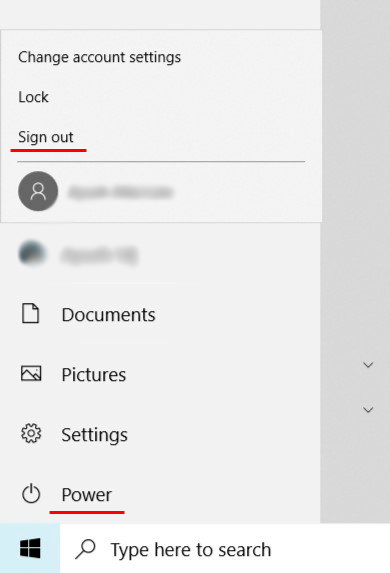
Subsequently you sign out, select the ambassador account that we activated before. If, for some reason, this account is non present on the screen, you need to restart your estimator.
Now, go to the organization directory with all user folders at C:\Users. Rename the user folder via the context menu or by pressing the F2 fundamental.
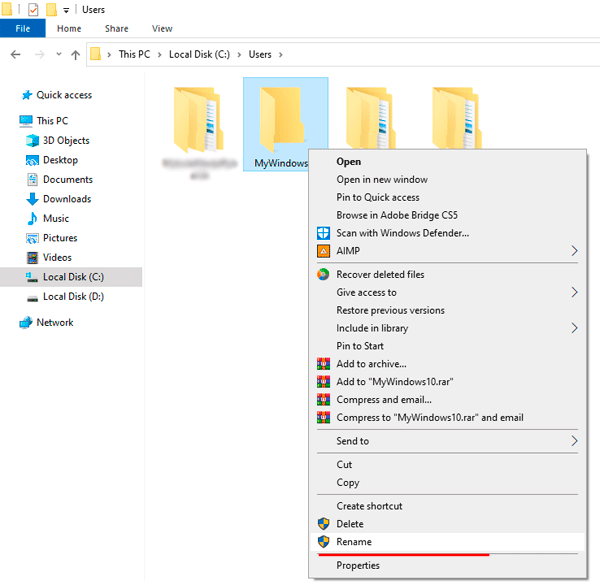
After that, you lot need to make changes to the Windows Registry. To do this:
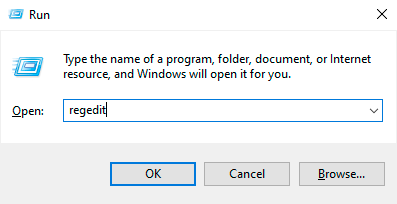
Stride 1: Printing the "Win+R" fundamental combination, and in the window that appears, enter the arrangement command "regedit" to start the registry editor.
Step 2: Go to HKEY_LOCALMACHINE\SOFTWARE\Microsoft\Windows NT\CurrentVersion\ProfileList and double left-click on "ProfileList" folder. The contents of this folder should open up up earlier us.
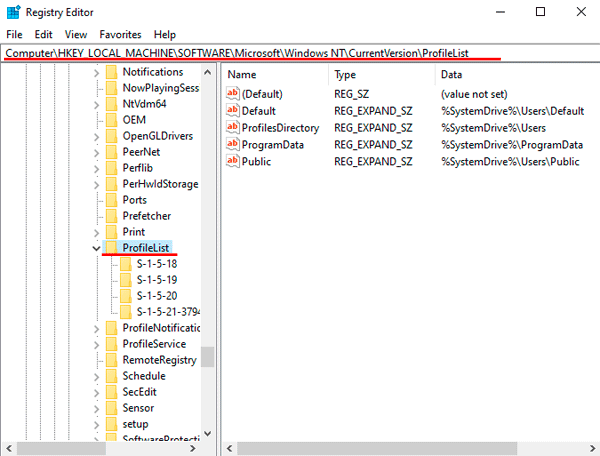
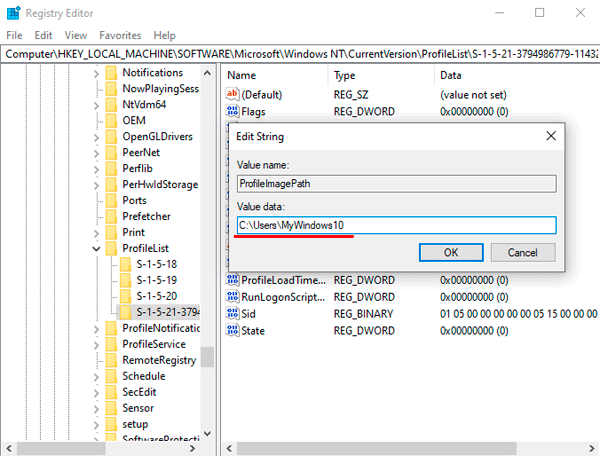
Step three: Now, you need to find precisely the folder that links to our account. It volition not be so easy to do considering the binder names comprise dashes and numbers. You should open each of them, paying attention inside to the value of the string "ProfileImagePath", which indicates to which profile the binder links. To see the value of the string, you demand to click on it twice.
Having plant the necessary folder, enter the updated path to the user directory. Confirm the action by clicking "OK".
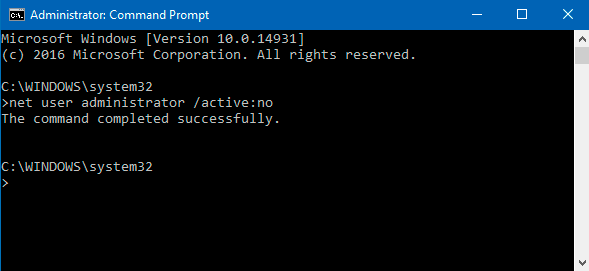
Now y'all can shut the registry editor. The just matter left is to disable the Administrator profile. To do this, launch the command prompt as Administrator and type the command "net user Administrator /active:no" Press "Enter" to confirm it.
Now it remains to restart the system and sign in to the business relationship for which the changes were made.
Method iii: Renaming the user data binder in Windows x Pro and Enterprise
If you are using Windows x Pro or Windows 10 Enterprise, y'all should rename the user data folder:
Step 1: Log in to your profile with administrator rights, or actuate your Ambassador profile post-obit the instructions described above.
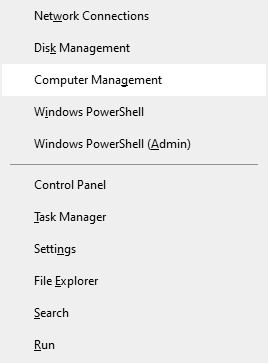
Pace 2: Open up the First context carte past pressing "Win+X" and clicking on "Computer Direction".
Step 3: Open "Local Users", then open "Users" and select the field with the user name to be renamed, correct-click on it and select "Rename".
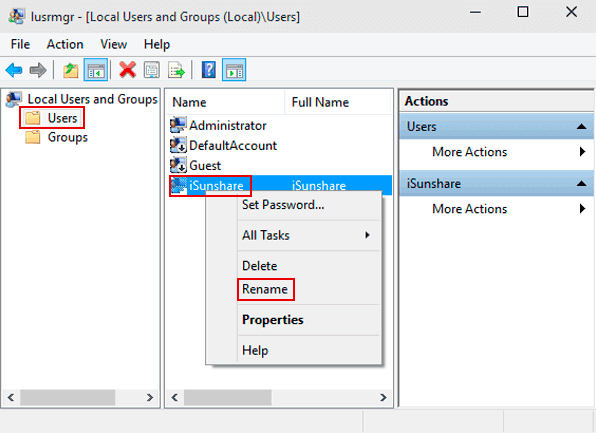
Step 4: Enter a new proper name, then click on any free infinite in the open window to save changes.
Pace v: Open the Explorer in any convenient fashion (for example, by pressing the Win+Due east keys) and change the user directory name, located at C:\Users
Step vi: Open the registry editor as described above and go to the list of profiles on the way: HKEY_LOCAL_MACHINE\SOFTWARE\Microsoft\Windows NT\CurrentVersion\ProfileList. Find a folder with the required account, equally described above.
Pace seven: Double-click on the "ProfileImagePath" string and set up a new custom directory path. Confirm the action by clicking "OK", and shut all windows.
Step 8: Open up "Windows PowerShell (Admin)" and deactivate the administrator profile past typing "net user administrator /active:no"
Afterward that, the process to change the name of the user directory can be considered fully completed. Now it is enough to sign out of the Administrator business relationship, and get to the one for which all the actions were performed. If everything has been washed correctly, there will be no system errors once the business relationship is started.
What to do if, during the data folder renaming, or moving your information into new user data folder important data was lost?
Often, in that location are situations when the user tin can exercise something not co-ordinate to instructions, or during the renaming of the information folder may occur system errors. Unfortunately, sometimes this can pb to the loss of of import data that may have been stored on the desktop or elsewhere on deejay C. Likewise, at that place are often situations when due to the manipulations of inexperienced users, Windows stops working, and yous have to reinstall the system, which almost always leads to formatting of deejay C. What to do if of import information was lost?
We strongly recommend you lot non to make jerky decisions and use a professional solution for data recovery RS Partition Recovery.
The programme is piece of cake to employ and, therefore, suitable fifty-fifty for inexperienced users.
Also, RS Sectionalization Recovery successfully recovers lost data in 99% of cases. RS Sectionalisation recovery supports ALL modern file systems and data recovery from RAID arrays, which significantly emphasizes it among other programs for data recovery.
To recover a lost file you should:
Stride 1. Install and launch the RS Partition Recovery.
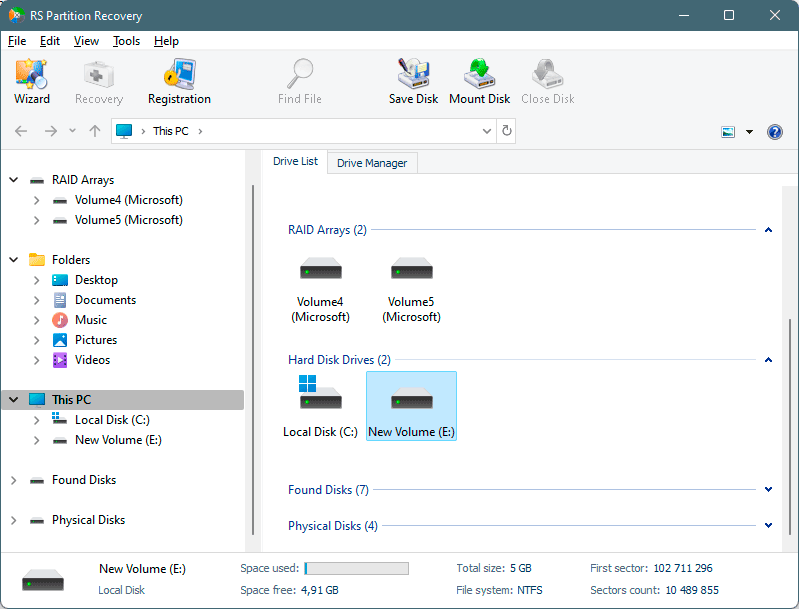
Footstep two. Select the drive or partition from which you lot want to recover information.
Step 3. Choose the type of analysis.
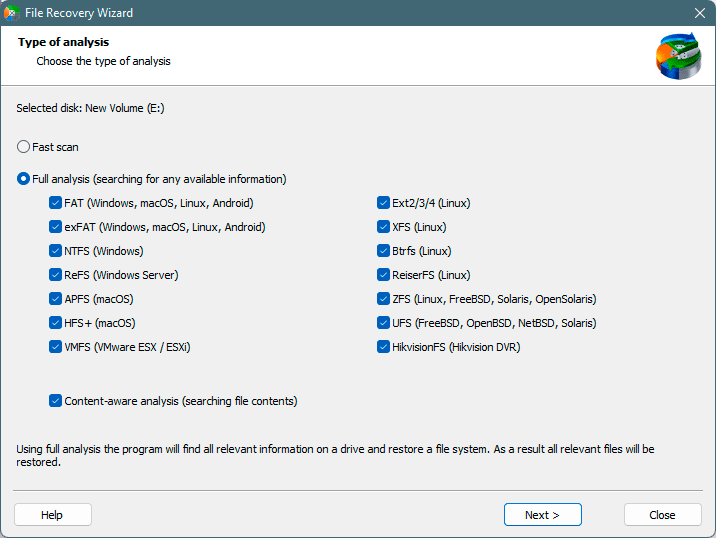
Fast scan yous should utilise in case the file was lost recently. The program volition scan the drive chop-chop and show the files bachelor for recovery.
The Full analysis function allows you to notice lost data, later on formatting, disc resizing, or file structure corruption (RAW).
Step 4. Preview and select the files to recover it.
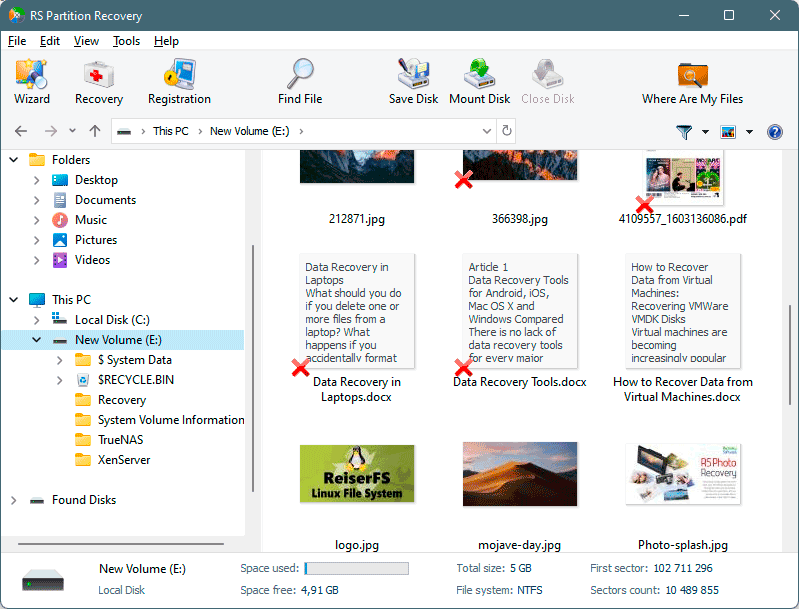
Footstep v. Add the files you want to save to the "Restore list" or select the entire partition and click Recovery.
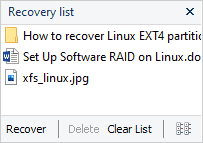
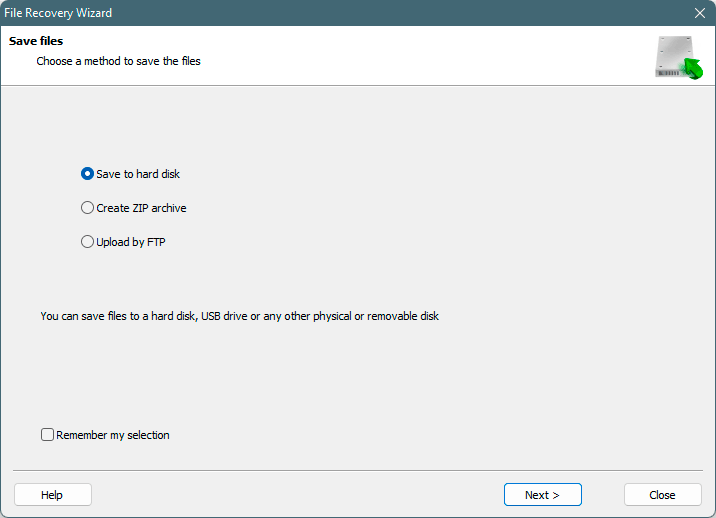
It should be noted that it is best to relieve the recovered file to an external hard bulldoze or USB flash drive.
The process of recovering the lost file will start, and once it is finished, the file will be available for use over again.
Often Asked Question
Source: https://recoverhdd.com/blog/how-to-rename-a-user-data-folder-in-windows-10.html
Posted by: layneacket1982.blogspot.com
0 Response to "How To Rename User Folder Name In Windows 10"
Post a Comment